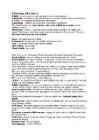
E.g. light blue, that thing · Progressive assimilation the word final morpheme affects the initial one of the following word (progressive assimilation of manner). E.g. in the, read these Assimilation also happens within words, not only across word boundaries. E.g. tenth, bank. Assimilation happens because it is more comfortable to go from one certain place of articulation to a similar place of articulation (from bilabial to labiodental etc.not bilabial to nasal). Elision in certain circumstances a phoneme maybe realised as zero or be deleted. (E.g. loss of final v in 'of' before consonants - ,,lots of them" Linking linking r ,,here are" and intrusive r ,,media event". A falling tone descends from a higher to a lower pitch A rising tone a movement from a lower pitch to a higher one NB! In tone languages pitch is a phonemic feature. In intonation languages the intonation of the phrase or sentence is contrasted.
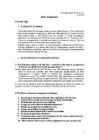
- exaggerating intonation patterns Sounds and spelling There is no complete one-to-one correspondence between letters and phonemes and it causes many problems for learners. Teachers can help students by giving them typical spellings for sounds every time they work on them. Connected speech and fluency The sounds of words change when they come into contact with each other. We can adopt a three-stage procedure for teaching St-s about features such as elision and assimilation. I stage comparing: we show learners sentences and phrases and have them pronounce the words correctly in isolation. Then play them a recording of someone saying the sentences in normal connected speech. We ask St-s what differences they hear. II stage identifying: St-s listen to recordings of connected speech, and they have to write out a full grammatical equivalent of what they heard. III stage production: in our modelling and teaching of phrases and sentences we
 annaabi.ee