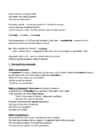
This social dimension was not the concern of positivist philosophers who argued that science was objective and independent of society. They distinguish the context of discovery from the context of justification. Merton Norms Sociologist Robert Merton in The Normative Structure of Science (1942) identified 4 norms that rule scientific activity: 1. Communalism Scientific knowledge belongs to all. Scientists share knowledge. 2. Disinterestedness Scientists do not engage their personal interests in their judgements. 3. Universalism The truth of scientific claims does not depend on who is making it. 4. Organised scepticism Scientific ideas are subject to test by the community. The Autonomy of Science Merton norms assure the autonomy of science: No external influence. No internal abuse. Criticism: These rules are disproved or disputed by history and practice.
I have nothing either to hope or fear, and nothing to reproach him with. Thank God! I have not that pain. A little time, therefore--I shall certainly try to get the better." With a stronger voice she soon added, "I have this comfort immediately, that it has not been more than an error of fancy on my side, and that it has done no harm to anyone but myself." "My dear Jane!" exclaimed Elizabeth, "you are too good. Your sweetness and disinterestedness are really angelic; I do not know what to say to you. I feel as if I had never done you justice, or loved you as you deserve." Miss Bennet eagerly disclaimed all extraordinary merit, and threw back the praise on her sister's warm affection. "Nay," said Elizabeth, "this is not fair. You wish to think all the world respectable, and are hurt if I speak ill of anybody. I only want to think you perfect, and you set yourself against it
 annaabi.ee