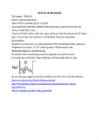
Veepuhastina kasutatakse 12-15% sisaldusega lahust. Veel kasutatakse seda lõhna/plekieemalduseks, disinfektsiooniks. Keskkonda sattudes moodustab püsivaid kloororgaanilisi ühendeid. Satuvad nt. reoveepuhastitesse heitveena. Tugev oksüdeerija, võib kahjustada nahka või silmi. EL klassifikatsiooni järgi on ta KORROSIIVNE ja KUJUTAB OHTU KESKKONNALE http://www.ekyl.ee/public/2012/Anu/Kemikaalid1.pdf http://www.lenntech.com/processes/disinfection/chemical/disinfectants-sodium- hypochlorite.htm http://en.wikipedia.org/wiki/Sodium_hypochlorite
Võrumaa Kutsehariduskeskus Puhastusainete analüüs Ajax Disinfection ühendab aktiivosakeste ning kloori desinfitseeriva jõu, toimides kaks korda tõhusamalt. Sobib valamute, toaleti ja pliitide ,pestavate pindade sügavpuhastustamiseks kogu majapidamises. Mõeldud eriti raskelt eemaldavale mustusele,pindade desinfitseerimiseks bakterite, hallituse ja viiruste kõrvaldamiseks. Toote ph on tugevalt happeline ( 0-2) . Doseerimine.Kuna pakend on spreipihustiga siis pihustatakse seda vahendit kas
Mixing Basin A basin for thoroughly mixing the coagulant and water together. Flocculator A basin for aggregating small impurities in the water into large clumps (flocs) by slowly mixing coagulant-injected water with a mixing blade that is located inside. Sedimentation Basin A basin for settling flocs that have grown in the flocculator. Sand Filter A sand bed that removes flocs that did not settle in the sedimentation basin. Here, water from the sedimentation basin passes through a sand layer. Disinfection Facility A facility that injects chemicals such as chlorine to disinfect the water and make it safe to drink. Purified Water Reservoir Reservoir inside the water purification plant for storing water that has been made drinkable. Conveyance Pump A pump for sending water from purification plant to a service reservoir located at a higher elevation.
Journal of Food Protection teurization process in a commercial beef processing 58(5):530–534. facility. Journal of Food Protection 60(5):485– Reagan, J. O., G. R. Acuff, D. R. Buege, M. J. Buyck, 492. J. S. Dickson, C. L. Kastner, J. L. Marsden, J. B. Oomori, T., T. Oka, T. Inuta, and Y. Arata. 2000. The Morgan, I. R. Nickelson, G. C. Smith, and J. N. efficiency of disinfection of scidic electrolyzed water Sofos. 1996. Trimming and washing of beef carcasses in the presence of organic materials. Analytical as a method of improving the microbiological quality Sciences 16(4):365–369. of meat. Journal of Food Protection 59(7):751– Park, H., Hung, Y-C., and R. E. Brackett. 2002. 756. Antimicrobial effect of electrolyzed water for inacti- Reed, C. A., and B. Kaplan. 1996. Foodborne illness
 annaabi.ee