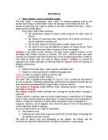
not want to sound too categorical (dullish lecture, lateish) · Together with noun stems ish forms adjectives with negative, contemptuous colouring (doggish, womanish) · Negative colouring becomes stronger with compound stems (honeymoonish) (boyish, girlish have no negative evaluation) Suffixes may be added to proper names: · -ish adds a derogatory colouring (Dickensish) · -ien with names gives a high flown style (dickensien) · -esque has positive connotation and it forms an element of refine style (dantesque) · The main noun forming suffixes with negative evaluation are:-ard, -ster, -monger, -eer · On the slang, -o shows contemptuous attitude (kiddo, coppo) · -happy, -dog show irony, contempt (car-happy, handsome-dog) · Negative affixes that show absence of some quality are rather expressive (unmask vs. reveal, motherless vs. orphan)
The negative colouring is even greater with compound stems (e.g. honeymoonish, come-hetherish, etc.). Exception: the words "boyish" and "girlish" do not have negative evaluation. Suffixes may be added to proper names. The suffix ish- adds a negative colouring (e.g. if the speaker has no respect for Dickens he can use suffix ish- to show it, so he can say "dickensish"). The suffixes ien and ean render the name as lofty (e.g. Dickensien, Shakespearean); suffix esque- possesses positive connotation and forms an element of refine style (e.g. Turner turneresque). The main noun forming suffixes that render negative evaluation are: -ard- (e.g. coward, drunkard, etc.), -ster- (e.g. gangster, hipster, oldster, etc.), -eer- (e.g. rocketeer, profiteer, blackmarketeer, etc.), semi affix: -monger (e.g. war-monger, panic-monger, etc.), -o- (e.g. kiddo (kid), oldo (old), coppo (cop), etc
 annaabi.ee