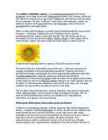
Sunflower
in many sunflower-producing countries, sunflower is the preferred and the most
commonly used oil.
High oleic sunflower oil (over 80% oleic acid) was developed commercially in 1985 and
has higher oxidated stability than conventional oil. It has expanded the application of
sunflower oils for frying purposes, tends to enhance shelf life of snacks, and could be
used as an ingredient of infant formulas requiring stability.
B. Meal:
�Non-dehulled or partly dehulled sunflower meal has been substituted successfully for
soybean meal in isonitrogenous (equal protein) diets for ruminant animals, as well as for
swine and poultry feeding. Sunflower meal is higher in fiber, has a lower energy value
and is lower in lysine but higher in methionine than soybean meal. Protein percentage of
sunflower meal ranges from 28% for non-dehulled seeds to 42% for completely dehulled
seeds. The color of the meal ranges from grey to black, depending upon extraction

 annaabi.ee