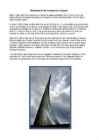
Monument to the Conquerors of Space! Built in 1964 just at the entrance to the All-Russias evhibition, teh VDNKh, this is an extraordinary monument housing a full museum in the mound beneath. It is all clad in shiny stainless steel. In March 1958, a few months after the launch of Sputnik 1, a competition was announced for the best design of an obelisk celebrating the dawn of the Space Age. Out of some 350 proposals, the design by sculptor A.P. Faidysh-Krandievsky and architects A.N. Kolchin and M.O. Barshch was chosen. The grand opening of the monument took place on October 4, 1964, on the day of the 7th anniversary of the Sputnik 1 launch. Since the 1960s, this part of Moscow in general has had a high concentration of space- themed sights and names: besides the monument and the museum under it, the grand "Cosmos" pavilion in the Exhibition Centre displayed many artifacts of the Soviet space program. Many stre...
19th century, in particular Pushkin, Mikhail Lermontov ( ), Nikolai Gogol ( ), Aleksander Griboyedov ( ), became proverbs or sayings which can be frequently found even in modern Russian colloquial speech. The political upheavals of the early 20th century and the wholesale changes of political ideology gave written Russian its modern appearance after the spelling reform of 1918. Political circumstances and Soviet accomplishments in military, scientific and technological matters (especially cosmonautics), gave Russian a worldwide prestige, especially during the mid-20th century. During the Soviet period, the policy toward the languages of the various other ethnic groups fluctuated in practice. Though each of the constituent republics had its own official language, the unifying role and superior status was reserved for Russian, although it was declared the official language only in 1990. Following the break-up of the USSR in 1991, several of the
 annaabi.ee