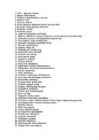
35. Wisdom teeth- tarkusehambadf 36. Germ- eos, alge 37. Progenitor- eelkäija, rajaja 38. Contribute- kaasa aitama, soodustama 39. Primordium- organi, rakulise struktuuri või koe kõige varajasem arenguprotsess 40. Immunosuppressive- immuunreaktsiooni pärssiv 41. Exfoliate- koorima 42. Shed- välja langema 43. Denote- teatavaks tegema 44. Deciduous teeth- piimahambad 45. Chondrocytes- kõhrerakud 46. Lipocytes- rasvarakud 47. Osteoblasts- luurakud 48. Myocytes- lihasrakud 49. Cardiomyocytes- südamelihasrakud 50. Undergo- läbi elama, kogema 51. Constitute- moodustama 52. Viable- elujõuline, mõistlik 53. Rodent- näriline 54. Customs- toll 55. Obtain- saavutama 56. Disaggregate- rakku eraldama kõige väiksemateks koostisosadeks. 57. Recapitulate- kokkuvõtlikult kordama 58. Oblique- kaudne 59. Cusp- sakk 60. Apposition- külg-külje vastu koos 61. Vascularization- veresoontega varustamine 62. Incisor- lõikehammas 63. Secretion- eritis, sekreet 64
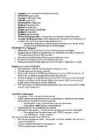
Therapy Introduction of new adult stem cell into damaged tissue Minimal risk of rejection and side-effects Potential to change an overall picture of human diseases Most therapies are at experimental stages Potential treatments Heart damage: - old and recent infarcts - Generation of heart muscle cells - Stimulation of growth of new blood vessels - Secretion of growth factors - August 2012: first successful integration of human ESC-derived cardiomyocytes - Diabetes human ESC grown in cell culture may be stimulated to form insulin- producing cells, that can be lately transplanted into patient - Stem cells from umbilical cord blood are used to re-educate a diabetic`s own T cells The Nobel Prize in Chemistry 2012 for studies of G-protein-coupled receptors · Robert J. Lefkowitz · Born: April 15, 1943 (age 69) · Alma mater: Columbia University · Institutions: Duke University; Howard Hughes Medical Institute
 annaabi.ee