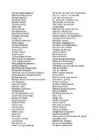
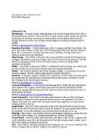
Shade-vari Wadi-race-kõrberalli Paint-maal Dreary chores of our everyday life- igavad I'm sorry to interupt majapidamistööd I'm sorry but Predecessors- eelkäijad That reminds me Possess-omama/valdama Could i just say something? Via sports- spordi kaudu Rake in- riisuvad Vanquish-võitma/võitu saama Unrelenting-järeleandmatu Success-edu Failure-ebaedu Recreation field- meelelahutusväljak Officials-ametlik Spectators-pealtvaataja Competitors- võistlejad Sprints- sprint Ting for first place- esimese koha pärast higistama Long jump- kaugushüpe Champion-tsempion Approximately- umbes 50 meters freestyle- 50 m vabaujumine retaining her title- tiitlit säilitama led from start to finish- juhtis algusest lõpuni didn't stand a chance-polnud võimalust in a class of her own- eraldiseisev klass
right. I can't stand the crap that gets talked by everyone: players, fans, the media, club officials. Why should I waste my time listening to people who are clearly less intelligent than me?" Arguably such iron-clad self-confidence is a minimal requirement if Capello, every bit as elegantly turned out as his compatriots, is to succeed Sven Goran Eriksson as only the second ever non- Englishman to legacy of order national side and face the unrelenting pressure for success and glory from fans and the media alike. But while there can be little doubt about the footballing credentials and steely will of a man who has won nine national league titles in 15 seasons with four teams in Spain 1 and Italy as well as the European Champions League, his penchant for dropping clangers and expressing robust political views have already generated headlines.
The men settle down to rest, smoke, and play cards in order to forget about their narrow survival during their last trip to the front. Kemmerich, one of Paul's classmates and a member of the Second Company, is in the hospital with a thigh wound. Paul recalls his schoolmaster, Kantorek, a fiercely patriotic man who persuaded many of Paul's friends to enlist as volunteers to prove their patriotism. Joseph Behm, one such young man, was hesitant but eventually gave in to Kantorek's unrelenting pressure. He was one of the first to die, and his death was particularly horrible. With Behm's death, Paul and his classmates lost their innocent trust in authority figures such as Kantorek. Kantorek writes a letter to them filled with the empty phrases of patriotic fervor, calling them "Iron Youth" and glorifying their heroism. The men reflect that they once idolized Kantorek but now despise him; they blame him for pushing them into the army and exposing them to the horror of war.
Wow. Just...wow. He sank into an elegant crouch directly in front of me. Hit with all that exquisite masculinity at eye-level, I could only stare. Stunned. Then something shifted in the air between us. As he stared back, he altered...as if a shield slid away from his eyes, revealing a scorching force of will that sucked the air from my lungs. The intense magnetism he exuded grew in strength, becoming a near tangible impression of vibrant and unrelenting power. Reacting purely on instinct, I shifted backward. And sprawled flat on my ass. My elbows throbbed from the violent contact with the marble floor, but I scarcely registered the pain. I was too preoccupied with staring, riveted by the man in front of me. Inky black hair framed a breathtaking face. His bone structure would make a sculptor weep with joy, while a firmly etched mouth, a blade of a nose, and intensely blue eyes made him savagely gorgeous. Those eyes
But none had come close to matching the immediate and ongoing commitment of the Dutch to the region. Indeed, Mr. Kroner went on to assure the flood victims that his government would be with them for the long term, stating that "everything we can do and everything Louisiana wants us to do, we are ready to do." Mr. Kroner also suggested one telling reason for this extraordinary willingness to help: The Netherlands owed it to New Orleans-for more than half a century. On January 31, 1953 an unrelenting gale pushed fierce North Sea waters across a quarter-million acres of his country, leveling dikes, levees, and thousands of homes while killing 2,000 residents. Soon thereafter, Dutch officials requested and received aid and technical assistance from their counterparts in New Orleans, which resulted in the construction of a new system of water pumps that have since protected the coun- try from similarly destructive floods. One wonders why it seems that the same lev-
young 'cello player, that Mauborgne and Kunze both play the violin at least passably, and that an English expert taught music. Rochefort virtually lived in that cellar for the first three months. He supervised the entire operation—interception, traffic analysis, cryptanalysis, translation. Dyer, his immediate subordinate, was in charge of the cryptanalytic section. A slender man just turning 40, with a mild, friendly personality but a tough and unrelenting mind, Dyer had come to the Islands in 1936 and had begun cryptanalytical work largely on his own initiative. He had become interested in the field soon after his graduation from Annapolis in 1924. Assigned to New Mexico as an assistant radio officer, he began doing the cryptograms in the naval communications bulletins, which intrigued him, and then read Friedman's Elements of Cryptanalysis, which hooked him. In 1931, he succeeded Safford as head of the Research Desk in the Code and Signal
 annaabi.ee