Bird protection in Estonia: v The first bird sanctuary Vaika, 1910 v The first Nature Conservation Act in Estonia, 1935 v Estonian Red Data Book v Protection nowadays v Bird habitats of Estonia: v Estonian climate v More than 1400 lakes v Estonian rivers v Estonian islands v Forests v Natural or seminatural grasslands Grasshopper Warbler (võsa- ritsiklind): v Breeder, transit migrant v Medium-sized v Insectivorous v Colour: adult – brown back, gray underparts v Consevation status – least concern v Eggs and nest v The song Brambling (põhjavint): v Breeder, transit migrant v Medium-sized v Mostly eats seeds, feeds youngsters with insects v Colourful v Consevation status – least concern v Eggs and nest v v Common Kingfisher (jäälind) : v Breeder, winterer v Sparrow-sized v Mainly on Fish v Blue upperparts, orange underparts, long bill v Consevation status – least concern v Eggs and nest v The song v Summary:
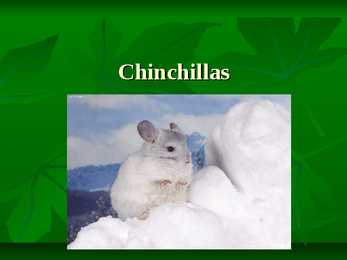
long-tailed relatives. The long-tailed chinchilla (Chinchilla lanigera) Also called the Chilean, coastal, or lesser chinchilla. Body length up to 26 cm. Average males weight 369493 g and females weigh 379450 g. The Chinchilla lanigera species, though rare, can be found in the wild. Domestic chinchillas are thought to come from the lanigera species. General info General color of upper parts is bluish or silvery gray, underparts are yellowish white. They can be also white. They mostly live in colder climates for which they are well adapted because of their dense fur. They are critically endangered. Chinchillas have a variety of defensive tactics including spraying urine and releasing fur if bitten. They mostly feed upon vegetation. In nature, chinchillas live in social groups that resemble colonies but are properly called herds. Chinchillas can breed any time of the year.
 annaabi.ee