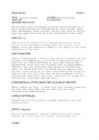
Hampshire Murders per capita Columbia 0.62 per 1, 000 people South Africa 0.50 per 1, 000 people Jamaica 0.32 per 1, 000 people Venezuela - 0.32 per 1, 000 people Russia 0.20 per 1, 000 people h Burglary Burglary is decrasing everywhere exept for the UK and Finland The level of self- protection (alarms etc) has risen, especially in the UK Less concern about burglaries h Percentage of thefts of personal property reported to the police Austria 62% Italy 61% Belgium 60% UK 59 % ... Estonia 28% Satisfaction with the police
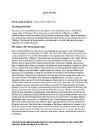
[4] Phishing Phishing is a form of fraud in which the attacker tries to learn information such as login credentials or account information by masquerading as a reputable entity or person in email, IM or other communication channels.[8] What are the consequences for the victims of identity theft? Although none of the victim's personal possessions may have been taken, there can actually be a number of large and serious consequences for victims. Most identity thefts are performed for monetary purposes, but there can also be danger for the victim's freedom or even life. The internet if full of stories about stolen credit card details, that have been used to order things online, buy gift cards and pretty much everything else imaginable. The more serious cases talk about criminal identity theft, identity cloning and medical identity theft where people have been framed for crimes they did not commit(from speeding tickets and drug posession to funding
There are two things that Alex enjoys: blood and classical music. IS THE PORTRAYAL OF THE CHARACTERS BELIEVABLE? WHY/NOT? While reading the book, it seems very real, because characters are very well described. But for real life are these characters too unbelievable. CONFLICT OR PROBLEM Problem was that Alex and his friends committed crimes and loved violence EVENTS: rising action Beating vagabondagers, robbing, fighting with other gangs, raping, car thefts and other violent and gruesome acts. CLIMAX: Alex's friends decide to rebel against him and he is left tied up in the crime scene. The police come and arrest him. EVENTS: falling action Alex gets imprisoned. Then he got the Ludovico treatment and wasn't able to do harm to others and himself. But there were sideeffects and he was reversed back to his old self. But he got tired of crimes eventually. RESOLUTION: Alex got the Ludovico treatment and couln't even think about violence
Deviant groups, such as gangs and mafia, develop their own norms, which serve well only for the members of the gang or even only for the leaders. Secondly, norms are often subject to interpretation and can thus be "bended" in situations by individuals to achieve their goals. For example, even though honesty is a strong norm and lying is seen as discrediting someone's general trustworthiness, individuals still tell white lies, and may often try to get away with minor thefts or bearings of false witness. And there is no punishment if they get away with it. Thirdly, as norms and values may bring out the best in people at times of crisis, they can also disappear, leading to quicker destruction of social order. An example of this would be Leningrad blockade during the Second World War, when many resorted to barbarianism and cannibalism, even though these ideas are strongly against civilized norms. Thus, norms help
Meena's family decide to move out of Tollington. Characterize and analyze the main characters (what motivates them, are they round or flat characters, do they develop, if so, in what way) Meena Kumar is 9 years old and lives in the village of Tollington `the jewel of the Black Country', the daughter of Indian parents who have come to England to give her a better life. Meena is, much to her parents' chagrin, no angel: She lies, commits minor thefts, and has the bad habit of making vulgar remarks when her prim and proper aunties are around. She is also having a difficult time adjusting to her surroundings, wishing she were blonde and carefree like her 14-year-old neighbor, Anita. Meena idolizes Anita for her looks and free spirit, and in many ways wants to be very much like her. Meena is even allowed to tag along with Anita's gang of older girls, although she is still something of an outsider. She just wanted to belong somewhere
Heider (1946), and Theodore Newcomb (1953) viewed the desire for consistency as a central motivator of behavior. Is this tendency to be consistent really strong enough to compel us to do what we ordinarily would not want to do? There is no question about it. The drive to be (and look) consistent constitutes a highly potent weapon of social influence, often causing us to act in ways that are clearly contrary to our own best interest. Consider what happened when researchers staged thefts on a New York City beach to see if onlookers would risk personal harm to halt the crime. In the study, an accomplice of the researchers would put a beach blanket down five feet from the blanket of a randomly chosen individual-the experimental subject. After several minutes of relaxing on the blanket and listening to music from a portable radio, the accomplice would stand up and leave the blanket to stroll down the beach. Soon
 annaabi.ee