continental Europe. The population of Ireland is 6.2 million and there are two official languages English and Gaelic. Ireland `s capital is Dublin. The area of Ireland is 84,421 km2 Ireland is separated into two parts. The north is part of the United Kingdom, while four fifths of the island make up the Republic of Ireland, which has been an independent country since 1921. The Irish are fun-loving and friendly. They like music and humour and they are also good storytellers. There are many legends in Ireland in which the leprechaun, the shoemaker of the Irish fairy kingdom, appears. He is no bigger than three feet tall and sometimes as small as twelve inches. Sightseeings The Giant's Causeway - is a fascinating natural wonder. The wild, primeval landscape is the very best of sea. The Ulster American Folk Park - near Omagh in County Tyrone Northern Ireland is an excellent way to experience the
10. Who was William The Conquerer? What is Stonehenge? a prehistoric monument located in the English county of Wiltshire built in several stages from 2800 - 1800 BC. Druids built Stonehenge. Who were the Celts and the Druids? The Celts were a group of peoples that occupied lands stretching from the British Isles to Gallatia. The Druids were the wise ones, the educated class of the Celts. ( lawyers, doctors, teachers, storytellers, and other professional of that culture.) When did the Romans invade Britain? Romans invade Britain in 55 B.C Julius Ceasar lived 13 July 100 BC 15 March 44 BC Why did Julius Ceasar call the land Albion ? Because there are white cliffs. Why and who built the Hadrian Wall? it was built on the orders of the Emperor Hadrian. The primary function of Hadrian's Wall was to keep out the Picts. When did the Saxons settle in Britain
Ireland is a beautiful island that is washed by the Atlantic Ocean in the west. It is know for its gorgeous landscape, the green hillsides and the rocky coastline. It is green all the year around and film-makers often use the beautiful landscape. The population of the Republic of Ireland is about three and a half million people. There are two official languages English and Gaelic. The Irish are friendly, fun-loveing and also good storytellers. They like music and humour. . The early Celts also believed that winds, storms, rocks, rivers, stones, clouds and the sun were like living beeings.
Consumers are clever and they´ll see throught your deceit at once. And most of all, great stories agree with our worldview. The best stories don´t teach people anything new. Consumers are complict in marketing. Consumers believe stories. Without this belief, there is no marketing. A marketer can spend plenty on promoting a product, but unless consumers are actively engaged in believeing the story. MARKETERS AREN´T REALLY LIARS They are just storytellers. It´s the consumers who are liars. As consumers, we lie to ourselves every day. We lie to ourselves about what we wear, where we lie, how we vote and what we do at work. Successful marketers are just the providers of stories that consumers choose to believe. This is a book about the psychology of satisfaction. Seth Godin believes that people tell themselves stories and then work hard to make them true. He thinks that people find a
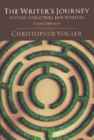
Novelists, playwrights, actors, and writing teachers have put the ideas to use in their work. Happily, the book has won acceptance as one of the standard H o l l y w o o d guidebooks for the screenwriting craft. Spy magazine called it "the new industry Bi ble." Through the various international editions (U.K., German, French, Portuguese, Italian, Icelandic, etc.) it has radiated to greater Hollywood, the world community of storytellers. Filmmakers and students from many countries have reported their interest in the Hero's Journey idea and their appreciation for the book as a practical guide for designing and troubleshooting stories. The Writer's Journey, meanwhile, has been put to work in many ways, not only by writers in many forms and genres, but by teachers, psychologists, advertising executives, prison counselors, video game designers, and scholars of myth and pop culture.
best seller, this was a pure accident, due to inattention and naiveté, and I would take very good care never to do the same again." His advice to students was to "be anything you like, be madmen, drunks, and bastards of every shape and form, but at all costs avoid one thing: success." The plain fact is that the planet does not need more "successful" people. But it does desperately need more peacemakers, healers, restorers, storytellers, and lovers of every shape and form. It needs people who live well in their places. It needs people of moral courage willing to join the fight to make the world habitable and humane. And these needs have little to do with success as our culture has defined it. Finally, there is a myth that our culture represents the pinnacle of human achievement: we alone are modern, technological, and developed. This, of course, represents cultural arrogance of the worst sort,
 annaabi.ee