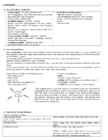
bucket and pass away. Here we observe a matter of degree. We use principle of contrast to know 42. Opposites (antonyms) 1) in the broad sense (= opposite) 2) in the narrow sense (= contrary adjective) Four main types of opposites (antonyms) 1) contrary antonyms (gradable antonyms) long / short; good / bad; fast / slow 2) complementary antonyms (either / or) dead / alive; male / female 3) converse (relational) antonyms (reciprocity) lend / borrow; buy / sell; wife / husband 4) reversives polarity – this is displayed when one term of a binary opposition is described as ‘positive’ and the other is ‘negative’. The most obvious cases are where one term carries a negative affix which the other lacks: possible : impossible, happy: unhappy, obey : disobey, dress : undress, and so on 43. Hyponyms Hypernyms (hyperonyms) Meronyms Holonyms Hyponym (subordinate) <> hyperonym (hypernym, generic term)
Compete/win/lose Aim/hit/miss o Counteractive CA - the first term denotes an aggressive action, the members of the complementary pair represent an active and passive response to the original counteraction Attack/defend/submit Punch/parry/take Converse (relational) antonyms o Wife/husband, borrow/lend, buy/sell, warmer/cooler Reversives – movement or change in opposite directions/states o Heat/cool, rise/fall, ascend/descend, advance/retreat/, improve/deteriorate 42. Hyponyms A word of more specific meaning than a general or superordinate term applicable to it. o Spoon, fork, knife are hyponyms for cutlery o Chair, desk, cupboard are hyponyms for furniture o Spaniel, retriever, dachshund arey hyponyms for dogs
 annaabi.ee