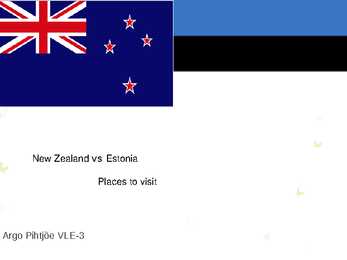
New Zealand Coromandel Peninsula the Coromandel is blessed with a superb climate coupled wih some of New Zealand's best beaches and coastline. A thermal beach called Hot Water Beach is one attraction worth seeing. Volcanic heat rises through the ground allowing you to create your own spa pool by simply digging a small hole in the sand and waiting for it to fill up with warm sea water. Kaikoura seaside town of Kaikoura overlooks majestic mountains which are snow capped for many months of the year. Kaikoura is one of the few places in the world where whales can be seen all year round. In addition, dolphin swimming, seal swimming, fishing, diving, shark diving, and a large number of both land and water based activities is available. Top ten places to visit in Estonia Tallinn Tallinn is the capital of Estonia.
jne. SANDS SKYPARK Hotel guests enjoy privileged access to the stunning Infinity Pool in Sands Skypark, our lush oasis located on level 57. Observation deck Infinity pool Casino Shows Restourants Meetings Weddings Shopping http://www.marinabaysands.com/Singapore-Promotions/October-Web-Special-2013/? gclid=CNa_7t7WoroCFXF8cAodBlEATw Berlin Hotel Adlon · Standard Double: US$299 · Royal Suite: US$14,662 The Hotel Adlon, which overlooks the Brandenburg Gate from the eastern side, was already Berlin's most famous hotel way back before World War II. It was naerly bomb-proof, and known as the place where foreign dignitaries and celebrities would stay whenever they visited town. In fact, I happened to be walking by its front entrance in 1999 when I saw a commotion that included Mikhail Gorbachev, George HW Bush and Helmut Kohl emerge from cars for a celebration there
the three surviving ones of Toompea Castle. It is 46 metres high and serves as one of Estonia's landmarks. Tall Hermann was a traditional name given to the main towers of German castles. After the 50-year-long Soviet occupation, the Estonian blue-black- and-white tricolour was once again hoisted on Pikk Hermann on 24 February 1989. There are several viewing points in the Upper Town. It is a must for everybody visiting Tallinn. For example on of them overlooks the Kopli peninsula, the Baltic Railway Station, the sea and the Tower Square. From other viewing points one can see the Lower Town with its red roofs that are breathtakingly beautiful. The Lower Town is full of different interesting places. St. Olaf's Church was first mentioned in 1267. It was known for its soaring spire and it was used as a lighthouse for ships, being probably one of the tallest buildings at the time. The spire has been struck by lightning many times
public building in the Middle Ages. The Tallinn Town Hall was first recorded in 1322, but there must have been some kind of a hall in the last quarter of the 13th century already, as Tallinn got its urban rights in 1248. The present Town Hall was built in 1401-1404, but was renovated in the 17th century. The last renovation took place in the 1970s when it got its original appearance. The weather vane was put on the spire in 1530. (The original vane is now a museum-piece). The main facade overlooks Town Hall Square and rests upon an open arcade. The Town Hall is a 2-storeyed structure with a basement and 11 rooms in all. The ground floor accommodates the present vestibule, it was called a wine cellar in the Middle Ages and it may have been a trading hall as well. The room next to the vestibule was a torture chamber according to the legend, but no evidence has been found to prove it. The main or the first floor was made up of the Citizens' Hall, the Council Hall, the office, the kitchen
Here too I say to you (12), "Smith's murderer is insane." In the context I am only using the description "Smith's murderer" to refer to the person we are looking at, the defendant, regardless of what attributes he has. Moreover, what I said is true if and only if the defendant is insane, regardless of his having committed the murder. This is what Donnellan calls the referential use. Donnellan's objection to the Theory of Descriptions is just that the theory overlooks the referential use; Russell writes as if all descriptions were used attributively. But, against Strawson, Donnellan complains that equally he did not see the attributive use, that Strawson writes as if all descriptions were used referentially, in a context, to draw somebody's attention to a particular person, place or thing. Thus both Strawson and Russell were mistaken in thinking that definite descriptions always work in one way, because there is an ambiguity acknowledged by neither
 annaabi.ee