collective action taken by governments to resolve free riders problems such as environmental degradation or excessive resource use. The free rider problem is also one justification for the existence of governments which provide public goods. Some ideologies, such as libertarian capitalism, are often rebuked, because in such a system all property in a society would be privately owned, away from any state involvement or regulation. Libertarians counter that potential free riders within their system could face social ostracism, which may deter those who accept services without donating any payment for them. Libertarians stress that the need to healthily co- operate and interact with others in society would lessen the risk and likelihood of free riders. 3 The Example
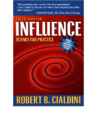
agree with that position by arranging to have their message restricted. The irony is that for such people-members of fringe political groups, for example-the most effective strategy may not be to publicize their unpopular views but to get those views officially censored and then to publicize the censorship. Perhaps the authors of this country's Constitution were acting as much as sophisticated social psychol- ogists as staunch civil libertarians when they wrote the remarkably permissive free PSYCHOLOGICAL REACTANCE . . . . speech provision of the First Amendment. By refusing to restrain freedom of speech, they may have been trying to minimize the chance that new political no- tions would win support via the irrational course of psychological reactance.4 Of course, political ideas are not the only kind that are susceptible to restric- tion
 annaabi.ee