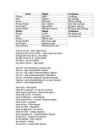
Probable Improbable Unlikely Arvatav, tõenäoline Pleased Un/displeased Annoyed Rahuldatud, rõõmus Normal Abnormal Bizarre tavaline Professional Unprofessional Amateur Important Unimportant Trivial Nouns Honesty Dishonesty Deceit Reality In/unreality fantasy Belief Disbelief Incredulity Verbs Appear Disappear Vanish Understand Misunderstand Confuse Trust Mis/distrust Suspect Cover Uncover reveal Keep calm Keep a promise Keep in touch with sb Keep going Keep a secret Keep sb waiting Keep fit Lose weight Lose your way Lose you temperature (meelelaad) Agree with Applied for Laughing at Died form/of Suffering from Believe in Married to Succeed in Compared to Complained to ... about Fell in love
You dare not, you cannot deny, that you have been the principal, if not the only means of dividing them from each other--of exposing one to the censure of the world for caprice and instability, and the other to its derision for disappointed hopes, and involving them both in misery of the acutest kind." She paused, and saw with no slight indignation that he was listening with an air which proved him wholly unmoved by any feeling of remorse. He even looked at her with a smile of affected incredulity. "Can you deny that you have done it?" she repeated. With assumed tranquillity he then replied: "I have no wish of denying that I did everything in my power to separate my friend from your sister, or that I rejoice in my success. Towards him I have been kinder than towards myself." Elizabeth disdained the appearance of noticing this civil reflection, but its meaning did not escape, nor was it likely to conciliate her.
But Hall convinced him of its authenticity, and the two went over to Grosvenor Square. When Page saw the message, he realized at once that the entry into war on England's side, which he had so single-mindedly pursued and the President had so obstinately opposed, was at last delivered into his hands. Hall, Bell, Page, and Irwin Laughlin, first secretary of the embassy, spent the day trying to decide how best to instill confidence in the telegram's genuineness, to minimize incredulity, and to maximize its impact. They decided that the British government should officially present the telegram to Page, and in his room at the Foreign Office the next day Arthur Balfour, now secretary of state for foreign affairs, formally communicated it to Page in a moment that Balfour later confessed was "as dramatic a moment as I remember in all my life." Page worked all night to draft a covering message explaining how the telegram was obtained. At 2 a.m
 annaabi.ee