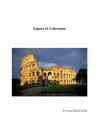
It is one of the greatest works of Roman architecture and Roman engineering.Occupying a site just east of the Roman Forum, its construction started between 70 and 72 AD under the emperor Vespasian and was completed in 80 AD under Titus, with further modifications being made during Domitian's reign (8196). The name "Amphitheatrum Flavium" derives from both Vespasian's and Titus's family name (Flavius, from the gens Flavia).Capable of seating 50,000 spectators, the Colosseum was used for gladiatorial contests and public spectacles. As well as the gladiatorial games, other public spectacles were held there, such as mock sea battles, animal hunts, executions, re-enactments of famous battles, and dramas based on Classical mythology. The building ceased to be used for entertainment in the early medieval era. It was later reused for such purposes as housing, workshops, quarters for a religious order, a fortress, a quarry, and a Christian shrine.It has been estimated that about 500,000
252 EPILOGUE: LOOKING BACK ON THE JOURNEY Titanic is a spectacle in this tradition. Lives were certainly sacrificed to the effort to put on this show, and the movie itself presents a feast o f death, the deaths of fifteen hundred people being re-enacted for our entertainment and edification. There is still something compelling about the spectacle of death on such a massive scale, like the gladiatorial combats and ritual sacrifices of the ancient world. A vast amount of life force is being released all at once, and in an almost ghoulish way we feast on it. At the sight of people hurtling from a great height to smash against various machinery our eyes grow big, as i f we are drinking in the sight of death. W e study the sea of frozen faces for signs of how they died and how it will be for us. Titanic plays on fears that have a high degree of identification for the audience
 annaabi.ee