Chipping Greeni lähedalt greenile löömine. Club Golfikepp, mis omakorda jagunevad iron`teks ja driver`iteks, sõltuvalt kepi kujust ja otstarbest Driver Golfikepp, mis spetsiaalselt mõeldud avalöögi sooritamiseks. (kasutatakse ka sõna wood-puukepp) Driving range Harjutusväljak, mille ühest servast sooritatakse lööke. Driving range juurde kuulub tavaliselt ka harjutusgreen, bunker ja/või veetakistus. Fairway Lühikeseks (ca 2cm) lõigatud muruga mängimiseks mõeldud maa-ala tii ja greeni vahel. Forecaddie Pallipoiss, kelle ülesandeks on näidata võistlejatele palli asukoht. Foregreen Greeni ümbritsev muru, mis on lõigatud 2-3mm kõrgemalt, kui green. Grip Golfikepi käepide, mis peab olema läbilõikelt ümmargune, ega tohi olla vormitud käe järgi. Groups Grupid, stardigrupid, kes mängivad koos.
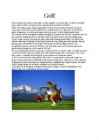
Some historians trace the sport back to the Roman game of paganica, in which participants used a bent stick to hit a stuffed leather ball. One theory asserts that paganica spread throughout Europe as the Romans conquered most of the continent, during the first century BC, and eventually evolved into the modern game. A golf course consists of a series of holes, each with a teeing ground that is set off by two markers showing the bounds of the legal tee area, fairway, rough and other hazards, and the putting green surrounded by the fringe with the pin (normally a flagstick) and cup. A typical golf course consists of 18 holes, but nine-hole courses are common and can be played twice through for a full round of 18 holes. Every round of golf is based on playing a number of holes in a given order. A 'round' typically consists of 18 holes that are played in the order determined by the course layout. On a nine-
 annaabi.ee