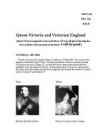
She was thoroughly devoted to him, and completely submitted to his will. Victoria did nothing without her husband's approval. Albert assisted in her royal duties. He introduced a strict decorum in court and made a point of straitlaced behavior. Albert also gave a more conservative tinge to Victoria's politics. If Victoria was to insistently interject her opinions and make her views felt in the cabinet, it was only because of Albert's teachings of hard work. The general public, however, was not enamored with the German prince; he was excluded from holding any official political position, was never granted a title of peerage and was named Prince Consort only after seventeen years of marriage. Albert took an active interest in the arts, science, trade and industry; the project for which he is best remembered was the Great Exhibition of 1851, the profits from which helped to establish the South Kensington museums complex in London.
antisem can of worms; but not antisem. Incubator of antisem, Red Army, rumor. Dispropor # Js killed at beginning, so not as many Js. Pop antisem, J draft-dodging. Not necessarily running away from front, but to E. Most prevalent rumor, part of Tashkent partisans (Uzbekistan). Js disprop among evacuees and refugees beyond Urals. How many? 10-15% SU J. "Js abandoned war effort, while we are fighting on their behalf." Stalin knows country is not enamored of him. National pride, yes; became more robust country, education, minorities rising. Purges had been horrific. Ukrainians still furious after famines 31-33. Old pat and natl imagery, calling to flag, not just hammer and sickle, Great Russian patriotism, Ortho Christian imagery. Old explanations for bad times. Following Battle of Kursk, Ger Army rolled back, 43. SU acquiring old SU territories and more, some rife w antisem, fanned esp by Polish and Romanian interwar regimes
 annaabi.ee