own life or impede on that of another in terms of their life, liberty or property as these were all the workmanship of one omnipotent Locke (1821, p. 191) and the only way taking a life might be justified was if someone threatened one's liberty. Locke's state of nature is far removed from how Hobbes (1981, pp. 56-57) describes it as being a state of war in which man is in perpetual fear and his life being ...solitary, poor, nasty, brutish and short. However, it seems that Locke is quick to revert from his stance of a state of nature being a state of peace, good will, mutual assistance, and preservation Locke (1821, p. 202) and it becomes apparent that there is in fact an overlap with Hobbes account. As there is no temporal or divine authority to protect ones property in a state of nature enjoyment of it is very uncertain and constantly exposed to the invasion of others Locke (1821, p. 295)
subjected to the judge. property Hobbes: A person may protect his property by law but not if the soveregin demands it Locke: Sovereign has to protect property; you make property by adding labour; you can accumulate as much of it as possible Rousseau: property is the source of all evil Hegel: basis of individual rights lies in property Hobbes leviathan Part one: of man XIII mans natural state is a state of war. Life in a state of nature is brutish and short. Man's natural traits are: -competision which makes him go to war for gain -Defence wich makes him go to war for safety -glory wich makes him go to war for reputation. XIV Natural law aruges that man has the liberity to preserve himself. Two laws can be derived as precepts for natural law in general -First to seek Peace -Second: To Grant as much liberty to others as you should want for for yourself. XVII-XIX Of the first and Second Natural Laws and of Contracts
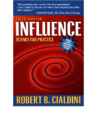
tage upon a society. It allows the development of sophisticated structures for produc- tion of resources, trade, defense, expansion, and social control that would otherwise be impossible. At the opposite end, the alternative is anarchy, a state hardly known for its beneficial effects on cultural groups and one that the social philosopher Thomas Hobbes assures us would render life "solitary, poor, nasty, brutish, and short." Consequently, we are trained from birth to believe that obedience to proper authority is right and disobedience is wrong. This message fills the parental lessons, the schoolhouse rhymes, stories, and songs of our childhood and is carried forward in the legal, military, and political systems we encounter as adults. Notions of sub- mission and loyalty to legitimate rule are accorded much value in each. Religious instruction contributes as well
 annaabi.ee