Leidsid 33 sarnast õppematerjali, mis on seotud failiga "Tate Modern". Need materjalid aitavad sul teemat sügavamalt mõista.
tate, light, build, building, gallery, four, collection, bank, power, station, swiss, display, british, year, cathedral, metres, chimney, designed, bridge, half, wing, present, since, amazing, location, south, river, thames, opposite, turbine, thirty, five, parallel, boiler, craig, known, night, miles, government, built, between, giles, gilbert, scottand the third-tallest free-standing clock tower in the world. The clock first ticked on 31 May 1859. The pendulum is installed within an enclosed windproof box sunk beneath the clockroom. It is 3.9m long, weighs 300 kg and beats every 2 seconds. The clockwork mechanism in a room below weighs 5 tons. · Buckingham Palace is the official London residence of the British monarch. Originally known as, the building which forms the core of today's palace was a large townhouse built for the Duke of Buckingham in 1703 on a site which had been in private ownership for at least 150 years. During the 19th century it was enlarged, principally by architects John Nash and Edward Blore, forming three wings around a central courtyard. Buckingham Palace finally became the official royal palace of the British monarch on the accession of Queen Victoria in 1837.
On the death of her father in 1952, she became Head of the Commonwealth and queen regnant of seven independent Commonwealth countries: the United Kingdom, Canada, Australia, New Zealand, South Africa, Pakistan, and Ceylon. Her coronation service in 1953 was the first to be televised. Between 1956 and 1992, the number of her realms varied as territories gained independence and some realms became republics. Today, in addition to the first four aforementioned countries, Elizabeth is Queen of Jamaica, Barbados, the Bahamas, Grenada, Papua New Guinea, the Solomon Islands, Tuvalu, Saint Lucia, Saint Vincent and the Grenadines, Belize, Antigua and Barbuda, and Saint Kitts and Nevis. In 1947 she married Prince Philip, Duke of Edinburgh, with whom she has four children: Charles, Anne, Andrew, and Edward. In 1992, which Elizabeth termed her annus horribilis
the Great Fire of London. London Bridge The home of the London Bridge is the Thames River, and a bridge has existed on the spot for at least the last 2000 years. The first bridge on record was constructed by the Romans, and since then many bridges have risen at the hands of various empires. London Bridge today remains one of the most popular tourist attractions in Britain as well as an icon for the City of London. London Bridge history records the building of a wooden bridge by the Romans about 2000 years ago. Historians suspect that the location was chosen for its relatively convenient access to the deeper ocean waters, as well as the excellent land conditions available for bridge building. The home of the London Bridge as it appeared in Roman times was in virtually the same spot as the home of the London Bridge today, suspended over the Thames River. The Romans were not the only people in London Bridge history to construct a wooden bridge
Art Museum of Estonia Art Museum of Estonia was founded on November 17th, 1919, but it was not until 1921 that it got its first permanent building the Kadriorg Palace, built in the 18th century. In 1929 the palace was expropriated from the Art Museum in order to rebuild it as the residence of the President of Estonia. The Art Museum of Estonia was housed in several different temporary spaces, until it moved back to the palace in 1946. In September, 1991 the Kadriorg Palace was closed, because it had totally deteriorated by then. At the end of the year the Supreme Council
The park is divided in two by the Serpentine. The park is contiguous with Kensington Gardens; although often still assumed to be part of Hyde Park, Kensington Gardens has been technically separate since 1728, when Queen Caroline made a division between the two. THE TOWER OF LONDON: Her Majesty's Royal Palace and Fortress, more commonly known as the Tower of London (and historically as The Tower), is a historic fortress and scheduled monument in central London, England, on the north bank of the River Thames. It is located within the London Borough of Tower Hamlets and is separated from the eastern edge of the City of London by the open space known as Tower Hill. It is the oldest building used by the British government. [1] TOWER BRIDGE: Tower Bridge is a combined bascule and suspension bridge in London, England, over the River Thames. It is close to the Tower of London, which gives it its name.It has become an iconic symbol of London.
London History The Romans AD 43- AD 410 The Romans finally invaded Britain in AD 43 from Kent. The Romans lead by Julius Caesar attempted to invade Britain twice before that in 55 and 54 BC but the invasions were unsuccessful. They made their way to the river Thames and sailed up it. The Romans knew it was important to control a crossing point at the river Thames, so they decided to build a settlement on the north bank. Although small settlements had been built on the banks of the Thames, the Romans were the ones who built the first city. They called their city Londinium. The Roman engineers noticed that the point where the swampy river narrowed would make an ideal crossing point, they built London Bridge. Less than 20 years later the native Iceni tribe, led by Queen Boudicca, rose up against the Romans in revenge for mistreatment and burnt Londinium to the ground
Also, trompe-l'oeil persisted via Charles Willson's Peale's sons. Artists: Ralph Earl, Francis Guy, Thomas Birch, James Peale, Raphaelle Peale. Mid-C19 Landscape. In C19, landscape painting became dominant and provided many unexplored subjects. The tradition of landscape art emerged in the 1820s through the work of the so-called Hudson River School. The school of "luminism" is also distinguished, it is interested in the phenomenon of light. Exemplary artists. Thomas Cole (early-C19). He painted more in the Romantic mold than his contemporaries. He was inspired by the valleys of Catskill Mountains. He depicted lonely wilderness and apocalyptic visions. Albert Bierstadt (late-C19). He painted the last frontier, the heroic landscape of the country. He compiled a portfolio of sketches during the mapping of a trail across the Rocky Mountains to California which became the basis
Also, trompe-l'oeil persisted via Charles Willson's Peale's sons. Artists: Ralph Earl, Francis Guy, Thomas Birch, James Peale, Raphaelle Peale. Mid-C19 Landscape. In C19, landscape painting became dominant and provided many unexplored subjects. The tradition of landscape art emerged in the 1820s through the work of the so-called Hudson River School. The school of "luminism" is also distinguished, it is interested in the phenomenon of light. Exemplary artists. Thomas Cole (early-C19). He painted more in the Romantic mold than his contemporaries. He was inspired by the valleys of Catskill Mountains. He depicted lonely wilderness and apocalyptic visions. Albert Bierstadt (late-C19). He painted the last frontier, the heroic landscape of the country. He compiled a portfolio of sketches during the mapping of a trail across the Rocky Mountains to California which became the basis
Roman armies were recalled from Britain to defend Rome itself. Once they had left Anglo-Saxons invaded and settled in Britain. They were farming people who preffered to live outside towns. For a while London probably lay in ruins, but it eventually developed again, partly because of its position on the river was good for trading. The Tower of London There is more of London's history in the Tower than anywhere else in London. It is the oldest surviving building in the capital. The Tower of London was begun by William the Conqueror in 1078 as a castle and a palace but even before the site had been used by the Romans and Anglo-Saxons. The tower comprises not one, but 20 towers, the oldest, the White Tower, dates back to the 11 th Century. The Roman stone wall, parts of which can still be seen on the territory of the Tower, may have been a small Roman fort near the river. The White Tower, called so on account of the white Caen stone Brought from
boundaries, but the name "London" has long applied more to the whole metropolis that has grown up around it. London has been an important settlement for over two millenniums. It is also one of the world's leading business, financial and cultural centres and its influence in politics, education, entertainment and even fashion contribute to its status as a major global city. London is a major tourist attraction with four world heritage sites, several royal parks and numerous iconic landmarks such as the Houses of Parliament, Towe Bridge, the Tower of London, Westminster Abbey and the London Eye. 2. History Although there is some evidence of a permanent settlement before the Romans came in 43 A.D., it is more accepted by historians that the Romans were the first. The settlement was called Londinium. The first London lasted for just seventeen years, for around AD 61, a tribe of Celts led by
The popularity and success of the Baroque style was encouraged by the Roman Catholic Church, which had decided at the time of the Council of Trent, in response to the Protestant Reformation, that the arts should communicate religious themes in direct and emotional involvement. The aristocracy also saw the dramatic style of Baroque architecture and art as a means of impressing visitors and expressing triumphant power and control. Baroque palaces are built around an entrance of courts, grand staircases and reception rooms of sequentially increasing opulence. Baroque architecture The Baroque style is noted as first being developed by Seljuk Turks, according to a number of academics like John Hoag. In Baroque architecture, new emphasis was placed on bold massing, colonnades, domes, light-and-shade (chiaroscuro), 'painterly' color effects, and the bold play of volume and void
is known, because there is the London zoo. The London zoo, opened in 1828 as a scientific zoo, is the oldest one in the whole world. In 1848, it was opened for people. The London zoo covers 36 acres and there are about 5000 animals in the zoo. The zoo is open every day except Christmas Day. The ticket costs 14 pounds for and adult and 10.75 pounds for a child. St. James's park is famous for its water birds, for example ducks and pelicans. Buckingham palace is near St James's park. The building of the Buckingham palace started in 1703. It was built for the Duke of Buckingham. The house was later bought by King George III for himself and Queen Charlotte. In 1820, King George IV commissioned John Nash to build a State Palace, much of the structure and decoration of which is seen today. Queen Victoria was the first monarch to live in the Palace, from 1837, and it has been the London home of the Royal Family ever since. The Royal Standard flies above the Palace when The Queen is in
Foreword Bridging rivers, gorges, narrows, straits, and valleys always has played an important role in the history of human settlement. Since ancient times, bridges have been the most visible testimony of the noble craft of engineers. A bridge can be defined in many ways, but Andrea Palladio, the great 16th century Italian architect and engineer, hit on the essence of bridge building when he said "...bridges should befit the spirit of the community by exhibiting commodiousness, firmness, and delight." In more practical terms, he went on to explain that the way to avoid having the bridge carried away by the violence of water was to make the bridge without fixing any posts in the water. Since the beginning of time, the goal of bridge builders has been to create as wide a span as possible which is commodious, firm, and occasionally delightful
The Cathedral of St. Mary the Virgin (Toomkirik or the Dome Church) was consecrated as a single- nave church with a rectangular chancel in 1240, and rebuilt into a Gothic basilica thereafter. The church suffered in the fire of 1684 and was largely reconstructed. A baroque tower was added in the 18th century and the dated weather-vane (1779) crowning the spire is the only original one on Toompea today. The church has a valuable collection of Baltic German noblemen's coats of arms, since it was the Baltic nobility's parish church. Many of them were carved from wood by the famous Tallinn wood carver Christian Ackermann in the 17th century. Among other functions, the church served as a burial ground for the rich and the noble. The church also features grave slabs, an oaken Baroque altar by Christian Ackermann and a number of monuments to famous people (e.g. Pontus de la Gardie, Karl
Trafalgar Square is a square in central London, England. With its position in the heart of London, it is a tourist attraction, and one of the most famous squares in the United Kingdom and the world. At its centre is Nelson's Column, which is guarded by four lion statues at its base. Statues and sculptures are on display in the square, including a fourth plinth displaying changing pieces of contemporary art, and it is a site of political demonstrations. The name commemorates the Battle of Trafalgar (1805), a British naval victory of the Napoleonic Wars. The original name was to have been "King William the Fourth's Square", but George Ledwell Taylor suggested the name "Trafalgar Square".
Criticism of Realist literary method. Denial of conventions (tava), traditional structure, plot and presentation of character. 3. Joseph Conrad and Literary Impressionism. New ways of presenting character and experience. Conrad's literary output. Lord Jim. Nostromo. Heart of Darkness and a critique of colonialism. Kurtz as Nietzsche's Superman. The darkness of human heart. Civilization and barbarism: which is which? Joseph Conrad and Literary Impressionism. Effect of light. Moments, very conscious of precious moments. Conrad: writer must do something like that on paper. Only by giving the impression can painter, writer can make people forget about their daily lives. New ways of presenting character and experience. Character is described as seen by other people. Impressionism in the description. Conrad's literary output -author suspects skepticism of the human condition.
We passed a beautiful house on our way to Birmingham. – Was the house for sale? I saw a man standing near the house. The man was well-dressed and looked like a businessman. In case of plural countable nouns and uncountable nouns, in ordinary situations, when something is mentioned for the first time, some is used. We passed some beautiful houses on our way to the beach. There were some people at the station. There was some sand on the building site. In extraordinary situations or when we want to emphasize something no article is used. Poor people cannot afford to live in beautiful houses. There were people inside the house on fire! There was sand on my plate! The Indefinite Article is used when referring to an indefinite object (just any of the kind). Could you lend me a pen? (Any pen would do, I just need
architecture. Not only have the artists reached local recognition, but also gained worldwide apperception. New Kiwi self-confidence is revealed intensely in literature, film and theater. Opera diva Kiri Te Kanawa performs regularly nationally and internationally. Writers such as Witi Ihimaera, Albert Wendt, Patricia Grace, and Keri Hulme are also international figures. Fine Arts In the past, Kiwis were hostile towards art. In 1982, the McDougall Gallery in Christchurch planned to spend $10,000 on a painting by Colin McCahon, arguably the country's most significant and contentious painter, and this triggered ire among locals. At present, however, McCahon's paintings are auctioned at very high prices in many international collections. A contemporary of McCahon is Gordon Walters, an artist who examines the relationship between a deliberately narrow range of forms, mostly the koru or fern bud. The rendering of
Following Sigismund's death, George of Podbrady (Jií z Podbrad) ruled as Bohemia's one and only Hussite king, from 1452 to 1471, with the backing of Utraquist forces. He was centuries ahead of his time in suggesting a European council to solve international problems by diplomacy rather than war, but he couldn't convince the major European rulers or the pope. After George's death two weak kings from the Polish Jagiellonian dynasty ruled Bohemia, though real power lay with the Utraquist nobles, the so-called Bohemian Estates. INDEPENDENCE Czechs had no interest in fighting for their Austrian masters in WWI, and neighbouring Slovaks felt the same about their Hungarian rulers. Many defected to renegade legions fighting against the Germans and Austrians. Meanwhile Tomás Garrigue Masaryk, Edvard Benes and the Slovak Milan Stefánik began to argue the case - especially in the USA with President Wilson - for the Czechs' and Slovaks'
Tartus secondary school of business Nuclear Power Helena Nulk form 11b Tartu 2009 Table of contents Introduction..........................................................................................................................................3 What is nuclear power?....................................................................................................................3 Nuclear life cycle.............................................................................................................................3 What is nuclear energy?...................................................................................................................3 What is nuclear fusion?.................................................................
London March 28th Parliament of the United Kingdom The Parliament of the United Kingdom, commonly known as the UK Parliament or British Parliament, is the supreme legislative body in the United Kingdom, British Crown dependencies and British overseas territories. It alone possesses legislative supremacy and thereby ultimate power over all other political bodies in the UK and its territories. Its head is the Sovereign of the United Kingdom (currently Queen Elizabeth II) and its seat is the Palace of Westminster in the City of Westminster, one of the Boroughs of the British capital - London. Tower of London The Tower of London, officially Her Majesty's Royal Palace and Fortress of the Tower of London, is a historic castle located on the north bank of the River Thames in central London.
work in a mostly abstract style. During the 1937 World Fair in Paris, Delaunay participated in the design of the railway and air travel pavilions. When World War II erupted, the Delaunays moved to the Auvergne, in an effort to avoid the invading German forces. Suffering from cancer, Delaunay was unable to endure being moved around, and his health deteriorated. He died from cancer on 25 October 1941 in Montpellier. The Aichi Prefectural Museum of Art (Japan), the Albright-Knox Art Gallery (Buffalo, New York), the Art Institute of Chicago, the Berkeley Art Museum, the Bilbao Fine Arts Museum (Spain), National Museum of Serbia in Belgrade, the Fine Arts Museums of San Francisco, the Guggenheim Museum (New York City), the Honolulu Academy of Arts, Kunstmuseum Basel (Switzerland), the Museum of Modern Art (New York City), the National Gallery of Victoria (Australia), the National Galleries of Scotland, the New Art Gallery (Walsall,
It was not until the 18th century that the name Lai also started to appear. In 1872, when the street names were being fixed, Lai remained the sole name of the street. 4 1 Lai Street / 4 Nunne Street A good example of Neo-Renaissance and early Art Nouveau styles combined is Lai Street 1, the present Youth and Puppet Theatre, erected at the beginning of the 20th century as the Nobility Club. The three-storey building replaces two medieval properties. In 1784 an amateur theatre began playing in a house situated in the same place and soon became a professional German City Theatre. The famous German writer August von Kotzebue (1761-1819), the life and soul of the theatre, lived in Tallinn for several long periods. (Otto von Kotzebue, the son of August von Kotzebue, accompanied explorer Adam Johann von Krusenstern on his Journey around the World of 18031806.) Estonian was heard
restaurants, sport and cultural centres. Every five years national song and folk dance festivals take place in Tallinn. The yachting regatta of the 1980 Moscow Olympic Games was held at Pirita. History Tallinn means in English "Danish town". The place is believed to have been settled by Finno-Ugric people about 2500 BC. It was first marked on a map of the world by the Arab geographer al-Idrisi in 1154. The Estonians were the first to build a stronghold on the spot of the Toompea Hill, but the real Tallinn was built by the Danes who conquered the north of Estonia in 1219. Legend has it that one day, when the Danes were about to lose a bloody battle, the sky suddenly opened and a red flag with a white cross on it dropped down upon them from the heaven. This is how the Danes obtained their national flag. In 1346 the Danish king sold his Estonian lands to the Teutonic Order, who a year later resold them to the Livonian Order
1. The Jacobean masque Elizabethan one nation culture, now cultural polarisation between the new courtly culture and the rest of the country. Court in cultural isolation. Ben Jonson. King and courtiers were close to universally recognised ideal types (conflict with the reality). Mysticism. Emergence of perspective view, stage machinery, artificial light, revolution. The stage cast the monarch in the focal point (the lines of perspective of the stage met there. Inigo Jones. Masque an educative vehicle, towards classical antiquity and architecture. Tide towards absolute monarchy. Masque – linked poetry and moral philosophy into art. Music, dance, poetry, lavish illusionistic scenic display to express the doctrines of divine kingship. Great impact. Like gods come down to earth. 2. The Caroline masque
Edinburgh Castle is an ancient stronghold which dominates the sky-line of the city of Edinburgh from its position atop Castle Rock. It is Scotland's second most visited tourist attraction. Human habitation of the site is dated back as far as the 9th century BC. As it stands today though, few of the castle's structures pre-date the Lang Siege of the 16th century, with the notable exception of St Margaret's Chapel, the oldest surviving building in Edinburgh, which dates from the early 12th century.As with all castles, Edinburgh's fortress has been a centre of military activity. As an ancient fortress Edinburgh Castle is one of the few that still has a military garrison, albeit for largely ceremonial and administrative purposes. The New Barrack Block is now home to the official headquarters of the Royal Regiment of Scotland and 52 Infantry Brigade, as well as home to the regimental museum of the Royal
Estonia was also shaped by the continental ice and the melting water. The land is rising 25 cm every one hundred years. In folklore, many features of the relief are explained by the activities of giants such as the legendary national hero Kalevipoeg. The Haanja and Otepää Uplands are particularly rich in Hills. It is here that You find Big Egg Hill, the highest point in the Baltic states with 318 metres above sea level. 4. Land regions The northern coast features a steep limestone bank, the Baltic glint, which is one of the world's most important denudations of Ordovician sedimentary rocks. The glint rises to its highest point (56m) at Ontika. Estonia has over 1,500 islands. The largest of them are Saaremaa, Hiiumaa, Muhu and Vormsi. There are over 1,400 lakes in Estonia, biggest being Lake Peipsi and Lake Võrtsjärv, while the deepest is Rõuge Suurjärv. The two longest rivers are the Võhandu and the Pärnu and the widest is Emajõgi
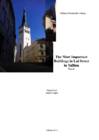
Tallinn Mustamäe College G2K Jaana-Kristiina Jõgevest The Four oldest churches of Tallinn Report Supervisor: Ingrid Teigar Tallinn 2009 The Dome Church The Danes began fortification of Toompea after the conquest of Tallinn in 1219 and probably also built the first church there. It was presumably a wooden building located at the site of the present cathedral. However, a serious conflict with the Order of the Brothers of the Sword broke out soon as the latter wanted to gain control of the entire Estonia. The order succeeded in subordinating Tallinn and the whole of North Estonia to its rule in 1227. The monks of the Dominican Order began the construction of a stone church in Toompea in 1229. The first written data on the cathedral date back to 1233, the date of a
maker. He could not find anyone to teach him, so he went to London. After a year James returned to Scotland where he became mathematical instrument maker to Glasgow University. He also made musical instruments organs, violins, flutes and guitars. Then he began to work on steam engine. He built a new type of engine, with a separate consider and an air pump. It was great discovery. Watt's engine became the basics of industry. He invented a copying machine. The unit of electric power or activity was named 'a watt' after him. He retired when he was 64. His last invention was a machine for copying sculptures. He had many friends. He died in 1819. A monument was erected to him. 4) THANKSGIVING In the United States, the fourth Thursday in November is called Thanksgiving Day. On this day Americans give thanks for their blessings they have enjoyed during the year. Thanksgiving is usually a family day, celebrated with big dinners and happy reunions
A book of lost illusions, the conclusion that the social system of the 19th century is a vast jail. Victorian England and Victorian poetry Victorian Age 1837–1901. Rapid developments; England leading industrial country; large empire. Steam power, railways/iron ships, printing presses, the telegraph, the intercontinental cable, photography, farmer’s combines, anaesthetics, compulsory education. National wealth accumulated: markets all over the world, many factories; social contradictions i.e. double standard: rich/poor, empire/colonies, wealth/exploitation,
A month later Estonia joined the United Nations. In 1997 the population reached 1.462 million; from this Estonians total 65% (950,124) and other nationalities 35%. The capital Tallinn, mentioned for the first time in 1154, has a population of 434,800 (1995). Other important towns are Tartu, Kohtla-Järve, Narva and Pärnu. Estonia is a developed industrial and agricultural country. In industrial output: oil shale, electrical energy, mineral fertilisers, paper, chemicals, building material, and textile production are prominent. In agriculture: milk, milk products, meat, grain, potatoes, fruits and vegetables. Estonian cultural life is manifold and intense, initiated by the National Awakening movement during the second half of the 19th century. Estonian folk arts date back to the remote past. In Estonia there are 27 higher educational establishments, among them seven universities with more than 25,000 students and post-graduates
............................................................................................27 SOLAR ENERGY..............................................................................................................27 8.1 Photovoltaic energy...................................................................................................... 28 8.2 Solar thermal heat.......................................................................................................29 8.3 Solar thermal power plants......................................................................................... 30 8.4 Solar energy and the environment..............................................................................30 WIND ENERGY.................................................................................................................31 9.1 The History of Wind ..................................................................................................31 9
According to the tradition, the Olympic Games began in 776 B.C. when Ifitos made a treaty with Lycourgos the king and famous legislator of Sparta and Cleisthenes the king of Pissa. In this treaty that was the decisive event for the development of the sanctuary as a Panhellenic centre, the "sacred truce" was agreed. That is to say ceasing of fighting in all of the Freek world for as long as the Olympic Games were on. The Olympic Games were held, after the completion of four years during the month of July or August. The time between two competitions was called the Olympiad. In the beginning the games lasted for only one day and comprised only one event, the running of one Stadion, but gradually more events were added resulting, towards the 5th century B.C., in the games lasting for 5 days. In total the Olympic Games consisted of 10 events: running, the pentathlon
 annaabi.ee